



MSCA Research Workshop – Practice of Digital Finance
-
- 0 Rating
- 0 Reviews
- 1 Students Enrolled
MSCA Research Workshop – Practice of Digital Finance
Organized by the Bucharest University of Economic Studies (ASE) 15 Jan 2026, 09:00 – 16 Jan 2026, 17:00
-
- 0 Rating
- 0 Reviews
- 1 Students Enrolled

Requirements
General Overview
Description
The Practice of Digital Finance workshop provides a collaborative platform for doctoral researchers to present and discuss their ongoing work at the intersection of finance, technology, and data science.
Organized under the framework of the MSCA Doctoral Network “Digital Finance – Reaching New Frontiers”, this two-day event brings together MSCA fellows and ASE PhD students to exchange ideas, showcase research progress, and receive constructive feedback from faculty and peers.
The program includes:
Research presentations on topics such as artificial intelligence in finance, blockchain technologies, risk modeling, and sustainable digital innovation; Thematic discussions focused on methodological approaches, empirical findings, and future publication strategies.
By fostering academic dialogue within the doctoral community, the event strengthens ASE’s and the DIGITAL network’s commitment to advancing rigorous and innovative research in digital finance across Europe.
We aim for PhD students to present their work. If you plan to present, please click the “Register” button, fill in your topic, and send your slides.
Time Schedule
Thursday (15/01)
-
10:00 – 10:20 → Registration
-
10:20 – 10:30 → Opening Session
-
10:30 – 11:00 → A Spectral Guide to the Spatial Weight Matrix Selection – Fulvio Raddi
-
11:20 – 11:50 → FINDER-LLM: FINancial Anomaly DEtection and Recognition using Large Language Models – Siang-Li Jheng
-
13:00 – 13:30 → First hitting time analysis for DeFi portfolios – Ginavar Andrei-Theodor
-
13:30 – 14:00 → White paper on Cryptocurrency Indices – Găman Ștefan
-
14:20 – 15:00 → PhD Network Discussion
Friday (16/01)
-
10:00 – 10:30 → Registration
-
10:30 – 11:00 → Systemic Risk Cascades in Pension Fund Networks: Evidence and Mathematical Framework – Megang Junile
-
11:20 – 11:50 → Empirical Mode Decomposition – Wolfgang Karl Härdle
-
13:30 – 14:00 → Hierarchical Time series in finance – Owen Chafffard
-
14:00 – 14:30 → AI Listening to Central Bank: From words to market and macroeconomy – Rahul Tak
-
14:50 – 15:20 → Introducing Neobank models that work. Where do we stand? – Anastas Dzurovski
-
15:20 – 15:50 → PhD Network Discussion
-
15:50 – 16:00 → Closing Session
Recommended for you
Meet the instructors !

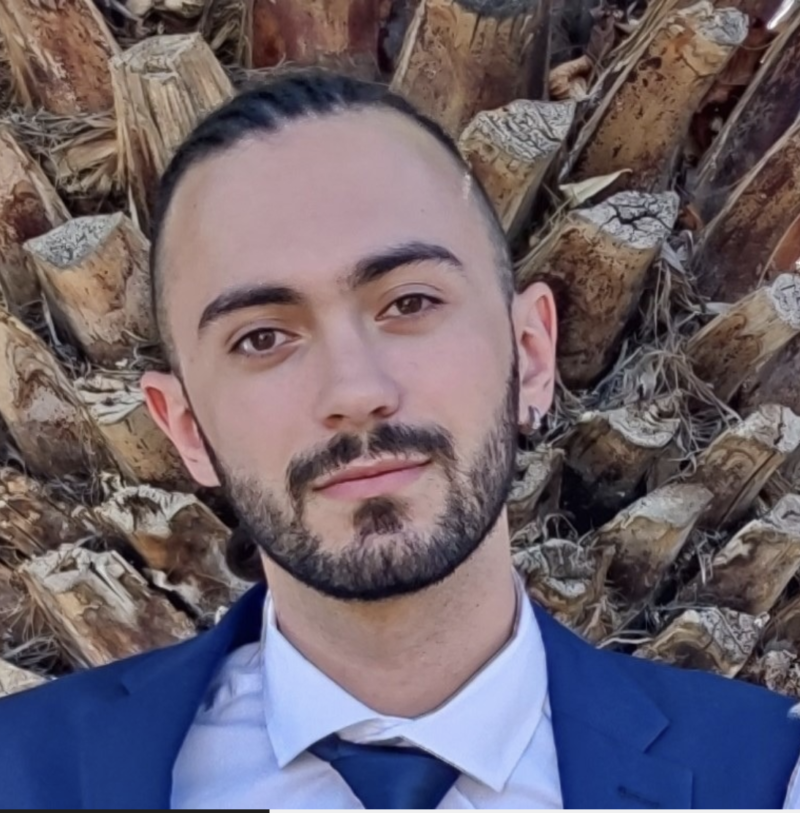
David Siang-Li Jheng is a PhD candidate at the Doctoral School of Cybernetics and Economic Statistics, Bucharest University of Economic Studies, Romania. His research focuses on detecting anomalies and modeling dependence structures in high-dimensional, high-frequency financial data.
With a background in financial engineering and mathematics from National Yang Ming Chiao Tung University (NYCU) and National Taiwan Normal University (NTNU), he investigates systemic risks through advanced methodologies such as Financial Risk Meters and anomaly detection models.

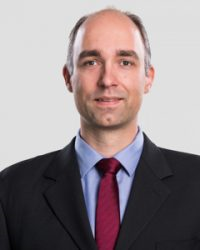
Wolfgang Karl HÄRDLE attained his Dr. rer. nat. in Mathematics at Universität Heidelberg in 1982 and in 1988 his habilitation at Universität Bonn. He is Ladislaus von Bortkiewicz Professor of Statistics at Humboldt-Universität zu Berlin and the director of the Sino German Graduate School (洪堡大学 + 厦门大学) IRTG1792 on “High dimensional non stationary time series analysis”. He directs IDA Institute for Digital Assets,
University of Economic Studies, Bucharest, RO. His research focuses on data analytics, dimension reduction and quantitative finance. He has published over 30 books and more than 300 papers in top statistical, econometrics and finance journals. He is highly ranked and cited on Google Scholar, REPEC and SSRN. He has professional experience in financial engineering, S.M.A.R.T. (Specific, Measurable, Achievable, Relevant, Timely) data analytics, machine learning and cryptocurrency markets. He has created the www.quantlet.com platform, a cryptocurrency index, CRIX www.royalton-crix.com He is 玉山学者 (Yushan Scholar), web page hu.berlin/wkh
.jpg)
Daniel Traian Pele is a Prof. dr. Department of Statistics and Econometrics Faculty of Cybernetics, Statistics and Economic Informatics, The Bucharest University of Economic Studies. https://scholar.google.com/citations?user=tN32HYcAAAAJ&hl=en
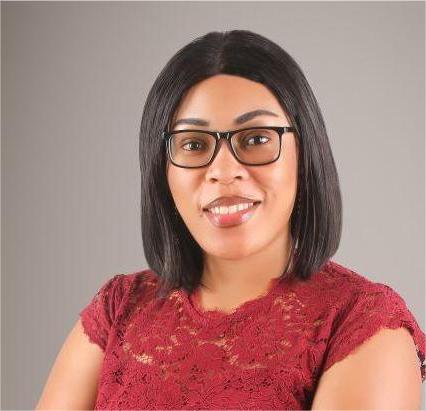
Megang is a doctoral candidate in the MSCA Digital Doctoral Network, specializing in agent-based modeling applications for sustainable finance analysis. They hold a BSc in Mathematics and dual master's degrees in Financial Mathematics and Data Science for Business. Their current research focuses on developing computational models to understand complex interactions within sustainable financial systems, bridging quantitative finance with environmental and social impact considerations.
Megang brings a unique interdisciplinary perspective to their work, combining mathematical rigor with practical business applications and cutting-edge data science methodologies. Their research contributes to the growing field of sustainable finance by providing novel analytical frameworks for understanding market dynamics and stakeholder behaviour in environmentally and socially responsible investment contexts.

David Siang-Li Jheng is a PhD candidate at the Doctoral School of Cybernetics and Economic Statistics, Bucharest University of Economic Studies, Romania. His research focuses on detecting anomalies and modeling dependence structures in high-dimensional, high-frequency financial data.
With a background in financial engineering and mathematics from National Yang Ming Chiao Tung University (NYCU) and National Taiwan Normal University (NTNU), he investigates systemic risks through advanced methodologies such as Financial Risk Meters and anomaly detection models.
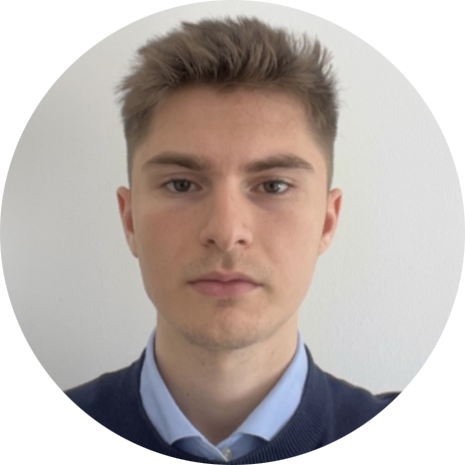
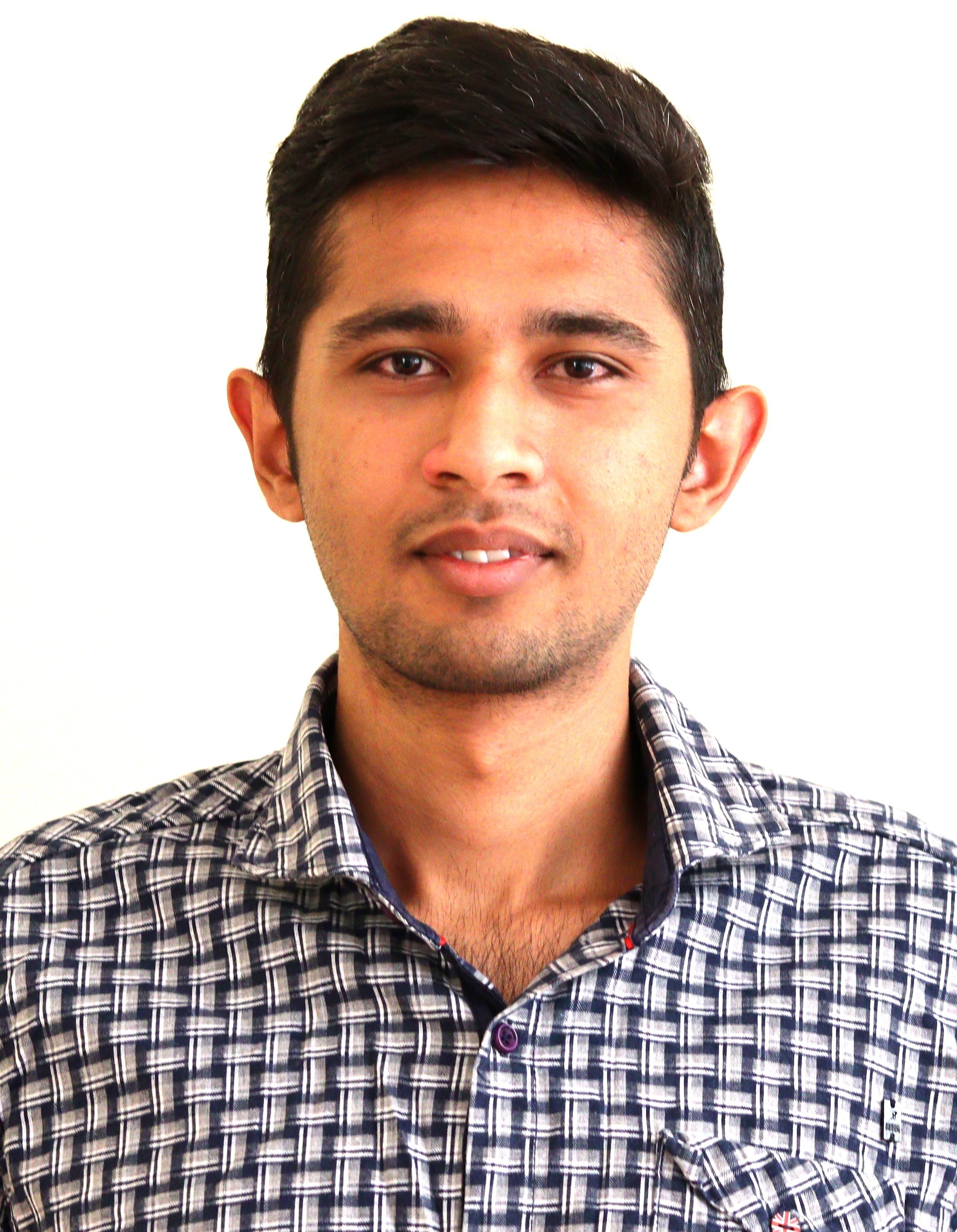
Andrei Theodor is a Ph.D. researcher at the Bucharest University of Economic Studies, where his doctoral research focuses on the application of large language models in forecasting digital asset returns. He holds an MSc in Applied Statistics & Data Science from the same institution and professionally he is a market analyst. He's also a researcher at the Institute of Digital Assets, a global research and education institution dedicated to the study of digital assets and their integration into the economy and society. His professional interests lie at the intersection of digital and traditional finance, with a specific focus on applying quantitative methods to problems of forecasting and risk management.